Cladding: The Skin of the Home
Cladding is the protective armor of your residence. Beyond structural defense against wind, rain, and UV radiation, it is the primary texture and color palette that defines the home's visual character. The right choice bridges building science and high-end design.
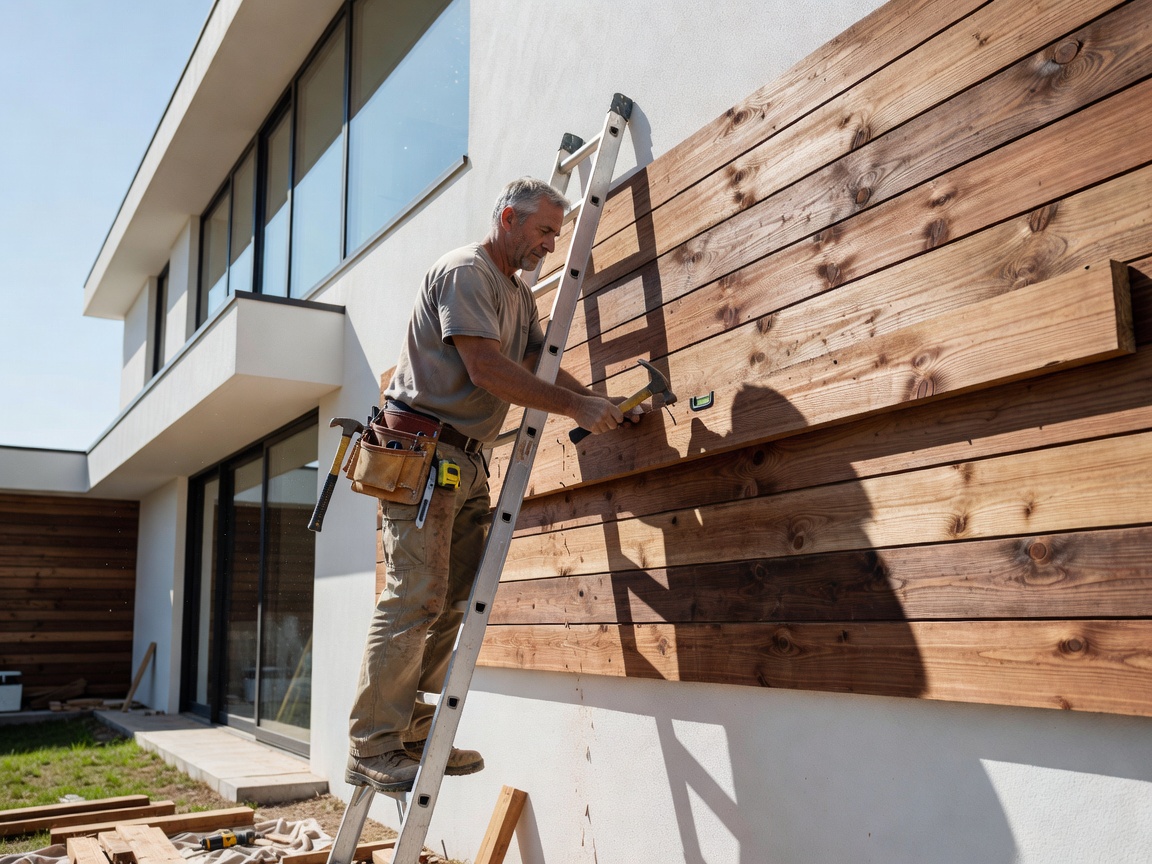
Thermally Modified Timber
Natural wood offers unparalleled warmth and organic appeal. However, untreated wood requires constant maintenance. Thermally modified timber is heated to over 200°C in an oxygen-free environment. This process alters the cellular structure of the wood, dramatically increasing its resistance to moisture and decay while enriching its color.
- Lifespan: 25 to 30 years with minimal maintenance.
- Aesthetic: Can be left to weather to a striking silver-grey or oiled to maintain deep browns.
- Eco-profile: Highly sustainable when sourced from FSC-certified forests.
Fiber Cement and Composite Panels
For those seeking the "Industrial Edge" or a highly minimalist aesthetic, large-format fiber cement panels deliver sharp lines and monolithic surfaces. Composed of cement, sand, and cellulose fibers, these panels are virtually impervious to fire, insects, and rot.
Advanced installation uses a rainscreen system—a physical air gap between the cladding and the structural wall. This gap allows for continuous drainage and ventilation, keeping the inner insulation perfectly dry and dramatically improving the home's thermal efficiency.
Masonry and Brick Veneer
Modern architecture frequently utilizes brick, but rather than load-bearing masonry, it is applied as a veneer. Linear, elongated bricks (often called Roman bricks) stacked in continuous horizontal bonds provide a grounded, horizontal emphasis that anchors the building to its site. They provide excellent thermal mass, absorbing heat during the day and releasing it slowly at night, stabilizing interior temperatures.