Windows: Framing the Outdoors
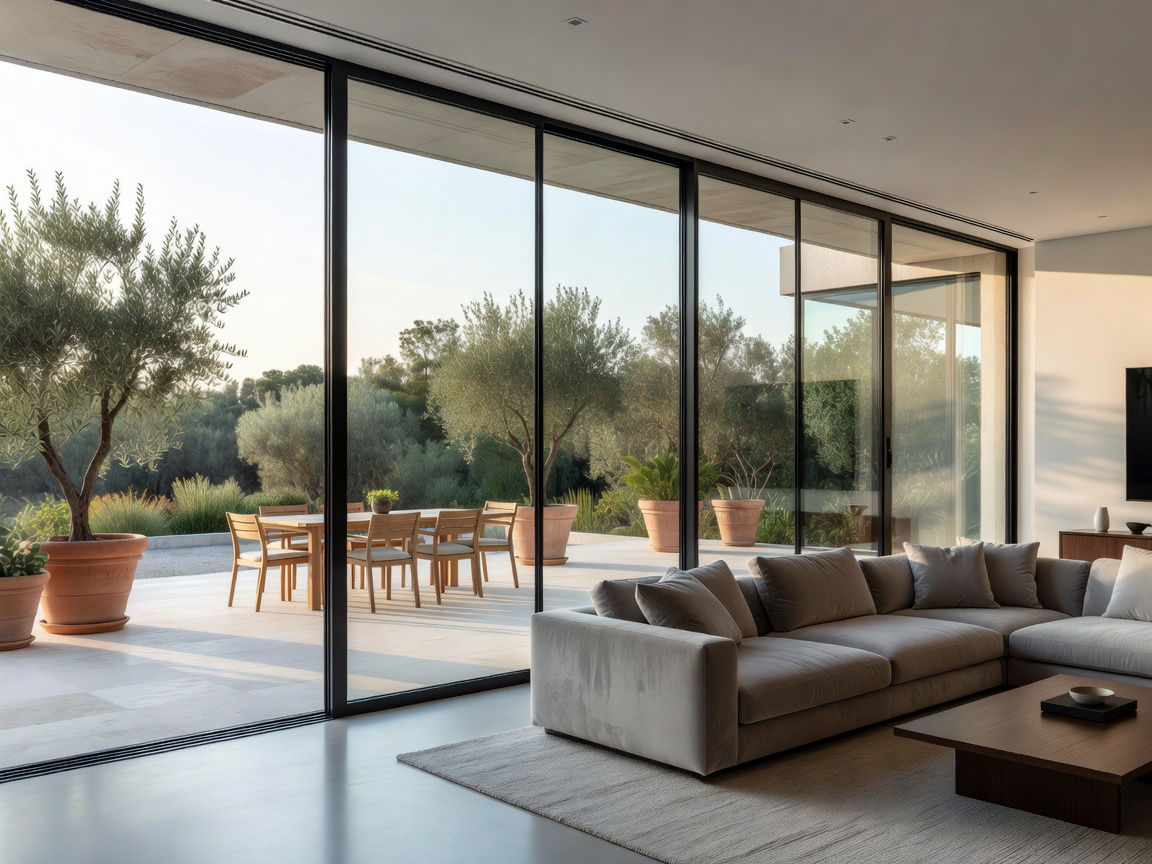
Fenestration is the arrangement, proportioning, and design of windows and doors in a building. In modern architecture, windows are no longer just punched holes in a wall; they are expansive, structural elements that blur the boundary between the sanctuary of the interior and the natural world outside.
Frame Materials
The profile of the frame dictates the aesthetic. Modern homes prioritize ultra-slim sightlines.
- Thermally Broken Aluminum: Offers immense structural strength allowing for massive panels of glass with profiles as thin as 20mm. The thermal break (usually polyamide) prevents heat transfer.
- Timber-Aluminum Clad: The warmth of natural wood on the interior, combined with the zero-maintenance durability of powder-coated aluminum on the exterior.
- Architectural Steel: Evoking classic industrial lofts, steel offers the strongest frame with the narrowest sightlines, though requiring careful specification to meet energy codes.
Glazing Technologies
The glass itself is a highly engineered component. Standard modern builds utilize argon-filled double glazing, but high-performance homes are pushing toward triple glazing for superior acoustic and thermal performance.
Low-E Coatings
Microscopic metallic layers that reflect interior heat back into the room during winter, while reflecting external solar radiation away during summer.
Acoustic Lamination
Using a PVB interlayer, acoustic glass dampens sound waves, crucial for homes situated in dense urban environments or near transit corridors.
Solar Control
Tints and reflective coatings that reduce glare and solar heat gain on south and west-facing elevations without sacrificing visible light transmission.